
For the first time, the event will take place across three locations in Delhi: Bharat Mandapam at Pragati Maidan, Yashobhoomi Convention Centre at Dwarka, and India Expo Mart at Greater Noida.

Glimpses from the Bharat Mobility Global Expo in New Delhi.

HCIL will voluntarily replace airbag inflators of 2,23,578 vehicles of previous generations of CR-V, Civic, City and Jazz.

Ahead of the festive season, several passenger and commercial vehicle manufacturers have agreed to offer discounts of 1.5-3 per cent on new vehicle purchase against scrapped old vehicles after a meeting with Union Minister Nitin Gadkari, an official statement said on Tuesday. The statement further said Mercedes Benz India has offered a flat discount of Rs 25,000, which will be over and above all existing discounts. Union Road Transport and Highways (RT&H) Minister Nitin Gadkari on Tuesday chaired a meeting with the SIAM delegation at Bharat Mandapam, where he addressed pressing issues in the automobile industry.

Due to the continued pressure of high costs, Toyota is considering a price increase of up to 3 per cent across models with effect from January.

Maruti Suzuki, Hyundai and Tata Motors reported a decline in wholesales in September as the companies curtailed dispatches to dealers to reduce inventory build-up amid a decline in demand. Maruti Suzuki India reported a 4 per cent dip in total domestic passenger vehicle wholesales last month to 144,962 units compared to 150,812 units in the year-ago month. The auto major said sales of mini segment cars, comprising Alto and S-Presso, grew marginally to 10,363 units against 10,351 units in September 2023.

With nearly 100 launches and unveils, the Bharat Mobility Global Expo 2025, held in Delhi from January 17 to 22, made one thing clear to automobile enthusiasts: Electric vehicles (EVs) are the way ahead for the Indian auto market for years to come.

Japanese auto major Honda Cars on Thursday unveiled its new offering for the Indian market -- City e:HEV sedan, marking its foray into the mainstream strong hybrid electric vehicle segment in the country. The company, which is present in India through a wholly-owned subsidiary, has commenced the bookings of the model and plans to introduce it in the market next month. As per the company, the model, an extension of its City model range, would feature self-charging two-motor strong hybrid system connected to a 1.5 litre petrol engine, entailing a peak power of 126 PS and fuel efficiency of 26.5 km per litre.

Passenger vehicle wholesales in India rose to a record high in October as companies pushed dispatches to dealers to cater to the enhanced demand in the festive season. The overall passenger vehicle wholesales in October rose to 391,472 units, up 16 per cent from 336,679 units in the same month last year. Last month witnessed the highest-ever dispatches of passenger vehicles in the domestic market by Maruti Suzuki India and Mahindra & Mahindra.

Sri Lanka watchers were startled on Tuesday evening to see an anti-government protestor being dragged off a Sri Lankan Airlines flight by police personnel at the Sirimavo Bandaranaike airport.

'Without his vision and foresight, his willingness to take a risk that no one else was willing to take, his deep and abiding love for India, the Indian automobile industry could not have become the powerhouse that it has become.'

Leading carmakers Maruti Suzuki and Hyundai on Thursday reported a dip in wholesales in July as companies reduced vehicle dispatches to dealers amid moderation in demand. Maruti Suzuki India said its total domestic passenger vehicle sales stood at 137,463 units in July against 152,126 units in the year-ago month, down 9.64 per cent.

The global semiconductor shortage hit passenger vehicle sales in September, with major manufacturers like Maruti Suzuki, Hyundai and Mahindra & Mahindra reporting a decline in sales on Friday. Kia India and Honda Cars also reported a dip in wholesales last month as compared with the year-ago period. Carmakers like Tata Motors, Toyota Kirloskar Motor, Nissan and Skoda, however, reported an increase in passenger vehicle dispatches last month despite supply chain issues.
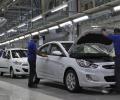
India's passenger vehicle exports rose by 26 per cent in April-June 2022 aided by enhanced shipments to Latin America and Africa and a low base of the year-ago quarter that was hit by the second wave of COVID-19. As per the latest data released by the Society of Indian Automobile Manufacturers (SIAM), passenger vehicle shipments rose to 1,60,263 units in the April-June period of this fiscal as compared with 1,27,083 units in the same quarter of 2021-22. Passenger car shipments saw an 88 per cent year-on-year growth at 1,04,400 units while utility vehicle exports rose 18 per cent to 55,547 units during the period under review, SIAM data showed.

The limited availability of flexible (flex)-fuel vehicles in the Indian market and the slow rollout of ethanol-blended petrol by oil-marketing companies (OMCs) remain major obstacles to achieving widespread use of biofuels in the transportation sector in India. Recently, two Union ministers have emphasised India's biofuel potential, arguing that it has the capacity and potential to lead a transition towards widespread biofuel adoption. Road Transport Minister Nitin Gadkari signalled that this transition is well underway and urged car manufacturers to quickly adapt and introduce new biofuel-run vehicles, lest the government resort to taxing diesel vehicles.
Leading automakers Maruti Suzuki, Hyundai and Tata Motors on Friday reported robust sales for February as demand for sports utility vehicles continued to remain strong. Mahindra & Mahindra, Toyota Kirloskar Motor and Honda Cars also witnessed higher vehicle dispatches to dealers last month. February turned out to be the third-best month for sales for the industry ever.

Compact sedans (Maruti Dzire, Hyundai Aura, Tata Tigor)' share in the overall sedan category grew from 68% in 2021 to 74.6% in 2024. Mid-sedans' (Honda City, Maruti Ciaz, Volkswagen Virtus) share declined from 26.2% in 2021 to 20.2%.

Honda cars has strengthend market share in India in the past five years.

Prices of various car models -- ranging from entry-level hatchbacks to high-end luxury offerings -- are set to rise as automakers have announced price hikes with effect from January. Carmakers cite an increase in input costs and operational expenses as the main reason to implement price increases from the next month. Industry experts, however, note that the exercise is also undertaken by automakers every year in December to shore up sales volume in the last month of the year, as customers postpone buyouts to later months to get the new year manufactured units.

Honda Motorcycle and Scooter India (HMSI), the country's second-largest two-wheeler manufacturer, is planning to launch its first electric vehicle (EV) here by March next year, said CEO & MD Atsushi Ogata on Monday. The company would also enter the low-end motorcycle market in March by launching a 100cc engine bike at a price that will "positively shock" customers, he said while speaking with reporters, after launching the Activa with Honda Smart Key. HMSI's first EV, an electric scooter, will have a fixed battery and the second model will have two swappable batteries, Ogata explained.

Leading carmakers Maruti Suzuki and Hyundai witnessed a double-digit drop in sales in October on account of the global semiconductor shortage impacting production. Kia India, Honda Cars and MG Motor also saw a fall in dispatches last month as compared with October 2020. However, companies like Tata Motors, Mahindra, Nissan and Skoda managed to post positive numbers last month despite the supply chain challenges.

Of the 15 car manufacturing companies in India, eight have a market share of below 2 per cent, raising questions about their long-term future in a competitive market that has already seen Ford Motors and General Motors slam the door on India.

Even as India overtakes Japan in automotive sales in 2022, moving to third place for the first time, oddly enough the country's biggest motor show is going to see some big hitters give it a clear miss. Some prominent automotive brands have cited high event costs, negligible returns on investment, poor event management, and unfavourable location as reasons for their reluctance to participate. Major pure-play electric two-wheelers, too, are riding past this year's edition of the Auto Expo.

Tata Motors is looking to consolidate its position in the SUV segment as it marks its entry into the highly competitive mid-size space which is currently dominated by South Korean and Japanese carmakers. The Mumbai-based auto major on Monday launched midsize SUV coupe Curvv with petrol and diesel powertrains with a price starting at Rs 9.99 lakh. The company has already unveiled the electric version of the model in August.

'We are seeing one of the highest discounts in recent years across companies.' 'October is a crucial month with several festivals coming up.'

Most of the leading vehicle manufacturers were before the court, though their stand was not identical and sometimes contradictory.

The car has a good balance of ride and handling, excellent packaging, good performance and is priced competitively.

MotorOctane took this fun bike for a spin around a fun place -- Imagica Adventure Park -- to tell you more about it.

While Hyundai Motor India reported a marginal growth, Toyota Kirloskar Motor witnessed a dip in sales last month.

Passenger vehicle sales are expected to experience muted growth in the current financial year.

Maruti Suzuki, Hyundai, Honda Cars and Tata Motors posted single digit growth during the period under review while M&M reported decline in sales.
Rising fuel costs and a fast growing middle class makes India a potential market for microcars.
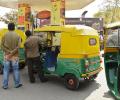
Amid a shift in mobility trends and people increasingly opting for less polluting energy sources, sales of compressed natural gas (CNG) vehicles increased more than 82 per cent in the past five years. A total of 729,902 CNG vehicles were sold in 2022-23 against 400,825 in 2017-18, according to VAHAN Dashboard. Though the increase in sales of CNG-powered vehicles has been significant, their share in overall vehicle sales remains minuscule as is the case with EVs.

The top six auto brands are: Maruti Suzuki, Hyundai, Tata Motors, Toyota, Kia and Mahindra & Mahindra.

The model, which will compete with the likes of Hyundai Verna, Maruti Suzuki Ciaz and Skoda Rapid, now features smart devices ecosystem including Alexa remote capability and 32 connected features as standard feature across all variants with a five-year free subscription.

The company aims to follow the government's push for environment-friendly vehicles by driving in models with green technologies.

The new Honda Accord Hybrid combines two worlds to offer a fitting blend of power and fuel efficiency.
Domestic passenger vehicle (PV) sales saw a significant growth in October due to increased availability of semiconductor chips and rising consumer confidence. The sales figures during the month - which coincided with the first post-Covid festival season - released by the top ten carmakers saw a jump of 30.7 per cent to 322,885 units in October. Auto companies count wholesales - units dispatched to dealers - as sales.
Passenger vehicle exports from India increased 43 per cent in FY22, with Maruti Suzuki India leading the segment with dispatches of over 2.3 lakh units, as per the latest data by industry body SIAM. The total passenger vehicle (PV) exports stood at 5,77,875 units in 2021-22 fiscal, as compared to 4,04,397 units in 2020-21. Passenger car shipments saw 42 per cent growth at 3,74,986 units, while utility vehicle exports rose 46 per cent at 2,01,036 units during the last fiscal, the data by the Society of Indian Automobile Manufacturers (SIAM) showed.

In this industry, a company's strategy needs to be adaptable in order to keep up with the pace of change.
 © 2026 Rediff.com - Advertise with us - Disclaimer - Privacy Policy - Sitemap - Feedback - About us - Terms of use - Grievances